Microchip PIC Alternatives: Finding Drop-In Replacements for Legacy PIC Microcontrollers
A comprehensive guide to finding drop-in replacements and alternatives for legacy Microchip PIC microcontrollers, covering pin-compatible options, migration strategies, and procurement insights for industrial and commercial applications.
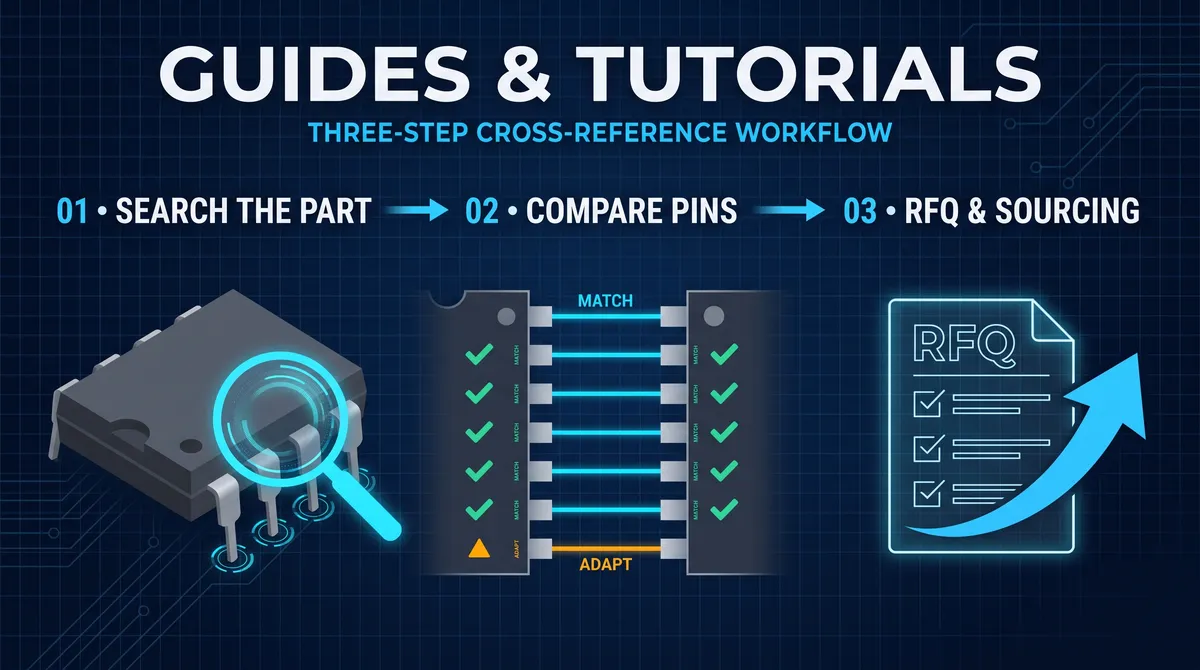
Microchip PIC Alternatives: Finding Drop-In Replacements for Legacy PIC Microcontrollers
The embedded systems landscape has undergone significant transformation over the past decade, forcing engineering teams to confront an uncomfortable reality: legacy Microchip PIC microcontrollers that once formed the backbone of countless industrial, automotive, and consumer products now face increasing obsolescence. Component shortages, end-of-life announcements, and escalating costs have made the search for reliable Microchip PIC replacement alternative solutions not merely a preference but an operational necessity. Engineers and procurement specialists alike find themselves navigating a complex ecosystem of 8-bit and 16-bit microcontrollers, each promising backward compatibility while introducing subtle architectural differences that can derail even carefully planned migrations. Understanding the nuances of drop-in replacements, functional equivalents, and pin-compatible alternatives requires a systematic approach that balances immediate production continuity with long-term maintainability. This comprehensive guide examines the landscape of Microchip PIC replacement alternative options, providing technical decision-makers with the analytical framework necessary to select, validate, and implement replacement strategies that preserve system integrity while ensuring supply chain resilience.
Why Engineers Seek Microchip PIC Replacement Alternative Solutions
The demand for a reliable Microchip PIC replacement alternative stems from multiple converging factors that have reshaped the embedded systems procurement environment. Original Microchip PIC microcontrollers, particularly the PIC16F and PIC18F series, achieved widespread adoption due to their deterministic instruction execution, extensive documentation, and mature development ecosystems. However, the semiconductor industry consolidation of recent years has fundamentally altered the availability calculus for these legacy components.
Component obsolescence represents the primary driver for PIC replacement alternative searches. Microchip has systematically transitioned many older PIC variants to "not recommended for new design" status, with formal end-of-life timelines that compress as manufacturing capacity shifts toward newer architectures like the PIC32MZ and PIC32MK families. Engineering teams supporting products with multi-decade lifecycles—common in industrial automation, medical devices, and infrastructure equipment—find themselves unable to source sufficient quantities of original components to sustain production.
Supply chain volatility has compounded the obsolescence challenge. The semiconductor shortages of 2020-2023 demonstrated that even active PIC products could become allocation-controlled, forcing OEMs to either accept extended lead times or identify equivalent microcontrollers from alternative manufacturers. A practical Microchip PIC replacement alternative must therefore address not only functional compatibility but also supply continuity—the ability to source consistent volumes over extended periods without market-driven allocation constraints.
Cost escalation presents another economic dimension. As legacy PIC production volumes decline, per-unit costs increase, sometimes dramatically for older masked ROM variants or specialized temperature-grade parts. Engineers evaluating a Microchip PIC replacement alternative must factor in not just the unit cost of the replacement component but also total cost of ownership, including development tooling, firmware modifications, and requalification expenses. The threshold for migration becomes favorable when the cost differential between original and replacement components offsets these transition investments within a reasonable production horizon.
Understanding the Microchip PIC Architecture Landscape
Evaluating a Microchip PIC replacement alternative requires foundational understanding of the architectural families that define the legacy component base. Microchip's PIC portfolio spans multiple generations of Harvard-architecture microcontrollers, each with distinct characteristics that influence replacement strategy.
The PIC10F series represents the entry point into PIC architecture, featuring 6-pin to 8-pin packages with minimal flash memory (typically 256 to 1024 words) and basic peripheral sets. These microcontrollers frequently appear in simple control applications where physical size constraints dominate design decisions. A Microchip PIC replacement alternative for PIC10F variants must address both the pin-count constraints and the simplified instruction set expectations of existing firmware.
The PIC12F family extends the mid-range architecture into 8-pin packages with enhanced analog capabilities, including integrated comparators and ADC channels. These parts serve as bridge controllers, sensor interfaces, and power management components across numerous applications. Replacement candidates must preserve the pinout compatibility or offer straightforward PCB layout adjustments while maintaining equivalent analog performance specifications.
PIC16F series microcontrollers constitute the largest segment of legacy PIC deployments, with hundreds of variants offering flash sizes from 1KB to 256KB, diverse package options from 8-pin DIP to 64-pin TQFP, and peripheral sets including timers, capture/compare modules, USART interfaces, and MSSP modules for I2C and SPI communication. The PIC16F877A and PIC16F886 remain particularly common in legacy designs, making them frequent subjects of Microchip PIC replacement alternative searches.
The PIC18F family introduced enhanced instruction sets, larger address spaces, and higher clock frequencies to the PIC line, targeting applications requiring greater computational headroom. With support for external memory interfaces and USB connectivity in certain variants, PIC18F parts appear in more complex embedded systems including industrial controllers, consumer electronics, and automotive modules. A comprehensive Microchip PIC replacement alternative evaluation for PIC18F components must address both instruction-set compatibility and peripheral register mapping.
Silicon Labs: A Leading Microchip PIC Replacement Alternative
Silicon Labs has emerged as a primary Microchip PIC replacement alternative source, particularly for engineers migrating from PIC16F and PIC18F architectures to more modern 8-bit platforms. The company's EFM8 and EFM32 families offer systematic compatibility paths that reduce migration complexity while delivering enhanced performance characteristics.
The EFM8 Busy Bee family provides direct replacements for PIC16F-class applications, offering compatible pin counts, similar peripheral architectures, and development toolchains that facilitate firmware porting. The EFM8BB52, for instance, delivers 50MHz operation compared to the typical 20MHz ceiling of legacy PIC16F parts, along with integrated capacitive touch sensing, multi-channel ADC, and hardware crypto acceleration—features that extend product capabilities beyond the original design specification. Engineers evaluating this Microchip PIC replacement alternative appreciate the pre-configured startup code and library functions that mirror PIC register naming conventions, reducing the firmware adaptation burden.
For applications requiring greater computational resources, the EFM32 Tiny Gecko series offers a 32-bit ARM Cortex-M0+ based path from PIC18F-class designs. The EFM32TG840 features 32KB flash, 4KB RAM, and peripheral sets including USART, I2C, SPI, and analog comparators that align with common PIC peripheral expectations. The key consideration for this Microchip PIC replacement alternative involves instruction set translation—existing PIC assembly code requires conversion to C or ARM Thumb instruction sequences, though the peripheral register abstractions in Silicon Labs' emlib reduce this burden for C-based firmware.
Power consumption represents a significant advantage of Silicon Labs microcontrollers over legacy PIC variants. The EFM32 series achieves sub-microamp sleep currents with real-time clock retention, compared to the higher sleep currents typical of PIC16F parts. This characteristic makes Silicon Labs a compelling Microchip PIC replacement alternative for battery-powered applications where power budget improvements directly translate to extended battery life or reduced battery capacity requirements.
| Parameter | PIC16F877A | EFM8BB52 | EFM32TG840 |
|---|---|---|---|
| Architecture | 8-bit Harvard | 8-bit C8051 | 32-bit ARM |
| Max Clock | 20 MHz | 50 MHz | 40 MHz |
| Flash | 14.3 KB | 64 KB | 32 KB |
| RAM | 368 bytes | 4 KB | 4 KB |
| Pins | 40/44 | 32-64 | 32-64 |
| ADC Channels | 8 | 16 | 12 |
| Sleep Current | ~50 nA wake | ~20 nA wake | ~20 nA wake |
STMicroelectronics: STM8 and STM32 Replacement Paths
STMicroelectronics offers dual-track Microchip PIC replacement alternative strategies through the STM8 8-bit family and the STM32 32-bit ARM Cortex-M family, enabling engineers to select the appropriate performance tier for their application requirements.
The STM8S family delivers performance approximately twice that of equivalent PIC16F parts at equivalent clock frequencies, achieved through an extended instruction set and pipelined architecture. The STM8S105K6, with 16KB flash, 2KB RAM, and comprehensive peripheral integration including timer PWM modules, UART, SPI, and I2C interfaces, serves as a practical Microchip PIC replacement alternative for PIC16F887-class applications. The STM8 architecture shares conceptual similarities with PIC instruction sets, including accumulator-based operations and simple addressing modes, facilitating firmware migration compared to more architecturally distinct alternatives.
Package compatibility requires careful attention when evaluating STM8 as a Microchip PIC replacement alternative. While ST offers many STM8 variants in standard packages including SOIC, TSSOP, and QFP footprints, direct pin-for-pin compatibility with PIC variants is uncommon. Engineering teams should budget for PCB layout modifications unless specifically seeking STM8 parts marketed as pin-compatible replacements by third-party distributors.
For applications demanding 32-bit performance or advanced connectivity options, the STM32F0 series provides an accessible ARM Cortex-M0 entry point from PIC18F-class designs. The STM32F072VB achieves 48MHz operation with USB 2.0, CAN, and I2C/SPI/UART peripherals, along with integrated ADC performance exceeding most legacy PIC parts. The STM32 ecosystem includes extensive middleware stacks for USB, TCP/IP, and file systems that enable feature expansion beyond the original PIC-based design.
ST's STM32Cube initialization and configuration tool represents a significant advantage in development efficiency, generating peripheral initialization code compatible with STM32 HAL and LL libraries. Engineers selecting this Microchip PIC replacement alternative gain access to a well-maintained firmware ecosystem that continues receiving updates and security patches, addressing a common concern with aging PIC development environments.
Texas Instruments MSP430: Low-Power Microchip PIC Replacement Alternative
Texas Instruments positions the MSP430 family as a Microchip PIC replacement alternative optimized for ultra-low-power applications, a segment where PIC microcontrollers historically required careful power management tradeoffs. The MSP430 architecture achieves this through a flexible clock system, multiple power modes, and peripheral design that minimizes active current consumption.
The MSP430FR2433 represents a compelling Microchip PIC replacement alternative for cost-sensitive applications requiring non-volatile memory. This variant incorporates 15.5KB of ferroelectric random-access memory (FRAM), offering write endurance exceeding 10^15 cycles compared to the 100,000-cycle typical limit of PIC flash memory. For applications requiring frequent data logging or parameter storage, this characteristic eliminates EEPROM addition and reduces memory-related firmware complexity.
Peripheral integration in MSP430 parts aligns well with PIC expectations, including comparators, timers with PWM capability, and universal serial interfaces. The MSP430FR2433 includes four 16-bit timers, an 8-channel 10-bit ADC, and UART/I2C/SPI support through a unified serial module that can be reconfigured at runtime—a flexibility advantage over PIC fixed-function serial peripherals.
Texas Instruments provides comprehensive development ecosystem support for MSP430 migration, including migration guides that map PIC peripheral registers to MSP430 equivalents. The EnergyTrace technology enables real-time current consumption monitoring, allowing engineers to validate power performance improvements when transitioning from legacy PIC designs. For battery-powered products where the original PIC implementation consumed excessive current, this Microchip PIC replacement alternative offers measurable power budget improvements.
| Feature | PIC16LF18877 | MSP430FR2433 | Advantage |
|---|---|---|---|
| Core Voltage | 1.8V-5.5V | 1.8V-3.6V | MSP430 optimized rails |
| Active Current | 150 µA/MHz | 100 µA/MHz | 33% reduction |
| Sleep Current | 30 nA | 50 nA (RAM retention) | Extended data retention |
| Flash Cycles | 100,000 | 10^15 (FRAM) | Unlimited write |
| ADC Resolution | 10-bit | 10-bit | Equivalent |
| Packages | 28-64 pin | 24-32 pin | Size-optimized options |
NXP LPC and Kinetis: Enterprise-Grade Microchip PIC Replacement Alternative
NXP Semiconductors provides enterprise-grade Microchip PIC replacement alternative paths through the LPC800 and Kinetis families, targeting applications requiring robust ecosystem support, extended availability guarantees, and advanced security features increasingly demanded in connected IoT applications.
The NXP LPC824 represents a modernized 32-bit Microchip PIC replacement alternative for PIC16F-class applications, featuring an ARM Cortex-M0+ core operating at up to 30MHz. This microcontroller includes switch matrix functionality that enables flexible pin routing of internal peripheral signals to any physical pin—a capability that significantly simplifies PCB layout by removing the pin multiplexing constraints inherent to PIC architecture. Engineers can reassign UART, I2C, and SPI functions post-layout, reducing respin requirements when pin conflicts arise.
The Kinetis KL series extends the replacement capability to PIC18F-class performance levels, with KL25Z variants offering 48MHz operation, USB OTG support, and hardware crypto engines for secure boot implementations. For applications where the original PIC design lacked security features, this Microchip PIC replacement alternative enables capability expansion without complete redesign.
NXP's commitment to long-term availability distinguishes their microcontrollers as PIC replacement alternative candidates. The company maintains product longevity programs extending 10-15 years for automotive and industrial grades, providing supply continuity assurances that align with extended product lifecycle requirements. This predictability enables engineering teams to confidently select NXP parts knowing that production quantities will remain available throughout the anticipated market life of replaced systems.
Renesas RL78 and RX: Japanese Manufacturing Microchip PIC Replacement Alternative
Renesas Electronics, formed through mergers of NEC, Mitsubishi, and Hitachi semiconductor divisions, offers RL78 and RX microcontroller families as Microchip PIC replacement alternative options with particular strength in automotive and industrial applications where Japanese manufacturing heritage carries weight.
The RL78 family targets direct PIC16F replacement with 8-bit architecture optimized for code efficiency and low power consumption. The RL78/G14 series provides extensive peripheral integration including multi-function timer units, 12-bit A/D converters, and serial interfaces configured through Renesas's flexible specification technology (FEST). Pin counts range from 20 to 64, covering the majority of common PIC footprints with appropriate package options.
Renesas positions the RL78 as a Microchip PIC replacement alternative emphasizing backward compatibility through similar register structures and instruction characteristics. The RL78 instruction set includes operations familiar to PIC programmers, and the compiler optimization characteristics produce code density comparable to PIC assembly implementations. For firmware-intensive applications where memory constraints limit architecture changes, this compatibility reduces migration risk.
The RX100 and RX200 series offer 32-bit ARM Cortex-M4F performance for applications outgrowing PIC18F capabilities. With operating frequencies up to 120MHz, integrated DSP instructions, and single-precision floating-point units, these parts address applications requiring digital signal processing, motor control algorithms, or advanced communication protocol handling. The RX family includes CAN and Ethernet controllers suitable for industrial networking applications where PIC-based designs lacked connectivity options.
Pin-Compatible and Drop-In Replacement Strategies
Beyond functional equivalence, some engineering teams prioritize pin-compatible Microchip PIC replacement alternative solutions that require minimal PCB modification. True drop-in replacements eliminate the layout redesign costs and timeline impacts associated with component migrations, though such options remain limited in the current semiconductor market.
Third-party compatible manufacturers have addressed this opportunity, with companies including Hong Kong-based suppliers and specialty semiconductor firms offering PIC-compatible microcontrollers in matching packages. These parts typically replicate PIC register maps, instruction timing, and peripheral behavior sufficiently to execute unmodified firmware binaries. Engineers should verify compatibility claims through thorough testing, as subtle timing differences or undocumented behavioral variations can cause intermittent failures in production systems.
The PinCompatible platform specifically addresses this need by cataloging verified drop-in replacement options across major PIC families. Our engineering team validates pinout compatibility, functional equivalence, and supply chain viability for each listed replacement, enabling procurement teams to confidently source alternatives without extensive individual component qualification efforts. When evaluating a Microchip PIC replacement alternative through our platform, engineers receive specification comparisons, recommended test protocols, and supplier verification documentation.
For applications where exact drop-in compatibility proves unattainable, "near-drop-in" replacements offer partial migration benefits. These microcontrollers maintain package and pinout compatibility while requiring minor firmware adjustments—typically peripheral initialization sequence modifications or register mapping updates. The development effort falls between true drop-in replacements and full architecture migrations, making near-drop-in options attractive when firmware resources permit limited modification work.
Migration Planning and Validation Protocols
Implementing a successful Microchip PIC replacement alternative requires systematic validation beyond basic functional testing. Engineering teams should develop comprehensive test protocols that verify replacement microcontroller behavior across the full operating envelope expected in production deployment.
Electrical characterization forms the foundation of migration validation. Replacement microcontrollers must demonstrate equivalent or superior performance across voltage ranges, temperature extremes, and timing specifications. Clock frequency tolerance, reset behavior, and brown-out detection thresholds require particular attention, as these characteristics directly impact system reliability. Engineers should document all deviations from original PIC specifications, evaluating each difference against application requirements to determine acceptance criteria.
Timing analysis ensures peripheral operation meets interface specifications for connected devices. UART baud rate accuracy, I2C timing compliance, and PWM resolution/duty cycle precision should undergo quantitative verification rather than functional pass/fail assessment. Minor timing variations acceptable for asynchronous communication may prove problematic for synchronous protocols or real-time control loops where cycle-accurate timing governs system behavior.
Software regression testing validates firmware operation on the replacement platform. This testing should exercise all code paths, including error handling routines and initialization sequences that may execute only during unusual conditions. Interrupt handling behavior requires special attention, as replacement microcontrollers may exhibit different interrupt latency, priority handling, or vector table structures compared to original PIC parts. Watchdog timer configuration and windowed watchdog behavior differences have caused field failures in poorly validated migrations.
Environmental stress testing accelerates identification of marginal compatibility issues. Temperature cycling, voltage variation, and power-on/off sequences should trigger comprehensive system verification, catching intermittent failures that might escape room-temperature functional testing. Long-term reliability implications of the Microchip PIC replacement alternative choice deserve particular scrutiny when applications operate in demanding environments or require extended service life.
Application-Specific Microchip PIC Replacement Alternative Recommendations
Different application categories impose distinct requirements that influence Microchip PIC replacement alternative selection. Matching replacement characteristics to application priorities maximizes migration success and minimizes unnecessary engineering investment.
Industrial control applications prioritize reliability, availability, and extended temperature operation. The STMicroelectronics STM8S family and Silicon Labs EFM8 series offer industrial temperature grades, comprehensive documentation, and multi-year availability commitments suitable for factory automation, process control, and instrumentation applications. For applications requiring robust analog performance or specialized industrial communication protocols, the peripheral integration and ecosystem maturity of these families provide advantages over less established alternatives.
Battery-powered and remote sensor applications emphasize power consumption optimization. Texas Instruments MSP430 and Silicon Labs EFM32 families excel in these scenarios, with sleep currents measured in nanoamps and wake-up times measured in microseconds. The MSP430 FRAM variants offer additional advantages for applications requiring frequent non-volatile writes, such as data logging or configuration storage. For wireless sensor nodes where the original PIC consumed excessive battery capacity, these Microchip PIC replacement alternative options can extend battery life by 50% or more.
Consumer electronics applications balance cost sensitivity with feature requirements and time-to-market pressures. NXP LPC800 and Renesas RL78 families provide cost-competitive options with development ecosystems that enable rapid implementation. The pin flexibility features of LPC parts prove particularly valuable in consumer products where PCB cost optimization drives layout decisions. Consumer applications with connectivity requirements benefit from STM32F0 USB support and ESP32 wireless options where radio capabilities exceed PIC-based predecessor designs.
Automotive applications impose stringent quality and reliability requirements that constrain Microchip PIC replacement alternative options. Only microcontrollers with appropriate automotive quality certifications, including AEC-Q100 qualification and PPAP documentation, should enter consideration. Renesas and NXP maintain strong positions in automotive-grade microcontrollers, with families specifically designed for automotive environmental and quality requirements. Supply continuity agreements with automotive OEMs typically mandate specific longevity commitments that these Tier-1 suppliers can satisfy.
Sourcing Strategies for Microchip PIC Replacement Alternative Components
Procurement strategy significantly impacts the success of Microchip PIC replacement alternative implementations. Even technically excellent replacement choices become problematic when supply chain issues prevent consistent component availability.
Authorized distributor relationships provide the highest confidence in component authenticity and supply continuity. Arrow Electronics, Avnet, Mouser Electronics, and Digi-Key maintain authorized distribution relationships with major microcontroller manufacturers, ensuring genuine parts with manufacturer warranty coverage. For automotive and industrial applications with stringent quality requirements, authorized distribution represents the default sourcing approach despite premium pricing compared to independent distribution channels.
Independent distributors and brokers offer alternate sourcing channels for allocation-constrained or obsolete components. Companies including Verical, SourceESB, and Component Sense provide curated independent marketplace access with varying levels of authenticity verification. When selecting independent sources for a Microchip PIC replacement alternative, engineering teams should request lot traceability documentation, datasheet verification, and incoming inspection protocols to mitigate counterfeit risks.
Direct manufacturer engagement may provide allocation advantages for high-volume applications. Major semiconductor manufacturers, including STMicroelectronics, NXP, and Renesas, maintain applications engineering and channel sales organizations capable of supporting customer-specific requirements. For applications consuming significant replacement microcontroller volumes, direct manufacturer relationships may unlock allocation priority, custom part configurations, or extended longevity commitments unavailable through distribution channels.
Buffer stock strategies hedge against supply volatility. Engineering teams should calculate appropriate safety stock levels based on consumption rates, lead time variability, and component shelf life. For microcontrollers with 10-year shelf life under proper storage conditions, building inventory against forecasted demand provides supply continuity insurance at the cost of carrying charges. The appropriate buffer level depends on application revenue contribution, production volume predictability, and alternative sourcing options available if primary supply encounters difficulties.
Development Toolchain Transition Considerations
A Microchip PIC replacement alternative selection impacts development infrastructure requirements beyond the microcontroller itself. Toolchain migration effort directly affects project timelines and engineering resource allocation, making this factor essential to migration planning.
In-circuit debuggers and programmers require replacement when target architecture changes. PIC-based designs using Microchip PICkit or ICD debuggers must acquire new debugging hardware compatible with the replacement microcontroller family. Most major manufacturers offer budget-priced development/debug probes: SEGGER J-Link for ARM targets, TI MSP-FET for MSP430, and Silicon Labs DBG for EFM8/EFM32. While these represent modest hardware investments, the associated driver installation, IDE integration, and team training efforts should factor into migration planning.
IDE and compiler transitions represent larger workflow investments. Engineers proficient in Microchip MPLAB X development environments face learning curves adapting to alternative IDE platforms. ARM-based replacements typically utilize IAR Embedded Workbench, Keil MDK, or free GCC-based toolchains including MCUXpresso for NXP or STM32CubeIDE for STMicroelectronics. The availability of compiler optimization levels, debugging features, and static analysis tools varies across these environments, potentially impacting code quality and development efficiency during the transition period.
Library and middleware portability affects firmware migration effort. PIC applications utilizing Microchip-provided peripheral libraries and middleware require equivalent library adoption or manual reimplementation. STM32 HAL/LL libraries, NXP SDK components, and Silicon Labs emlib provide functional equivalents for common peripheral operations, though API differences necessitate source code modifications. Applications with extensive Microchip library dependencies experience longer migration timelines than those implementing peripheral access directly through register manipulation.
Conclusion: Implementing Your Microchip PIC Replacement Alternative Strategy
The search for a reliable Microchip PIC replacement alternative reflects broader shifts in embedded systems manufacturing, where component lifecycle management has become as critical as initial design. The alternatives examined in this guide—Silicon Labs EFM8 and EFM32, STMicroelectronics STM8 and STM32, Texas Instruments MSP430, NXP LPC and Kinetis, and Renesas RL78 and RX—represent viable paths forward for engineering teams confronting legacy PIC obsolescence.
Successful migration requires balancing technical compatibility against strategic supply chain considerations. Drop-in replacements minimize immediate engineering impact but may inherit the availability constraints that prompted the search. Architecturally different replacement options demand more extensive validation but often deliver performance improvements, power efficiency gains, and enhanced feature sets that strengthen competitive positioning.
The PinCompatible platform continues expanding its catalog of verified Microchip PIC replacement alternative options, providing engineering teams with validated compatibility data, supplier verification, and procurement pathways. Our engineering team monitors semiconductor market developments, manufacturer roadmaps, and availability trends to ensure listed alternatives maintain relevance in evolving supply conditions.
Regardless of which Microchip PIC replacement alternative route your organization pursues, early action positions teams to manage transitions deliberately rather than reactively. Beginning replacement evaluations before production-critical shortages emerge allows thorough validation, production-intent testing, and buffer stock accumulation that prevents emergency procurement decisions with elevated risk profiles. The embedded systems landscape will continue evolving; engineering teams that institutionalize component lifecycle management practices will navigate these changes most effectively.
Not sure which sensor fits your project?
Talk to our mmWave application engineers for a free consultation.
Specify your hotel project with our engineers
Send your room count, ceiling type, and protocol preference. We will return a sample plan and quote within 24 business hours.
- Move from general guidance into a product or application discussion.
- Use RFQ when pricing, drawings, MOQ, or launch timing needs structure.
- Keep a direct contact path visible for fast clarifications and handoff.