China IC Supplier: How to Source ICs from China Safely
China IC supplier guide: how to source integrated circuits from China, qualify manufacturers and distributors, verify parts, and manage sourcing risk.
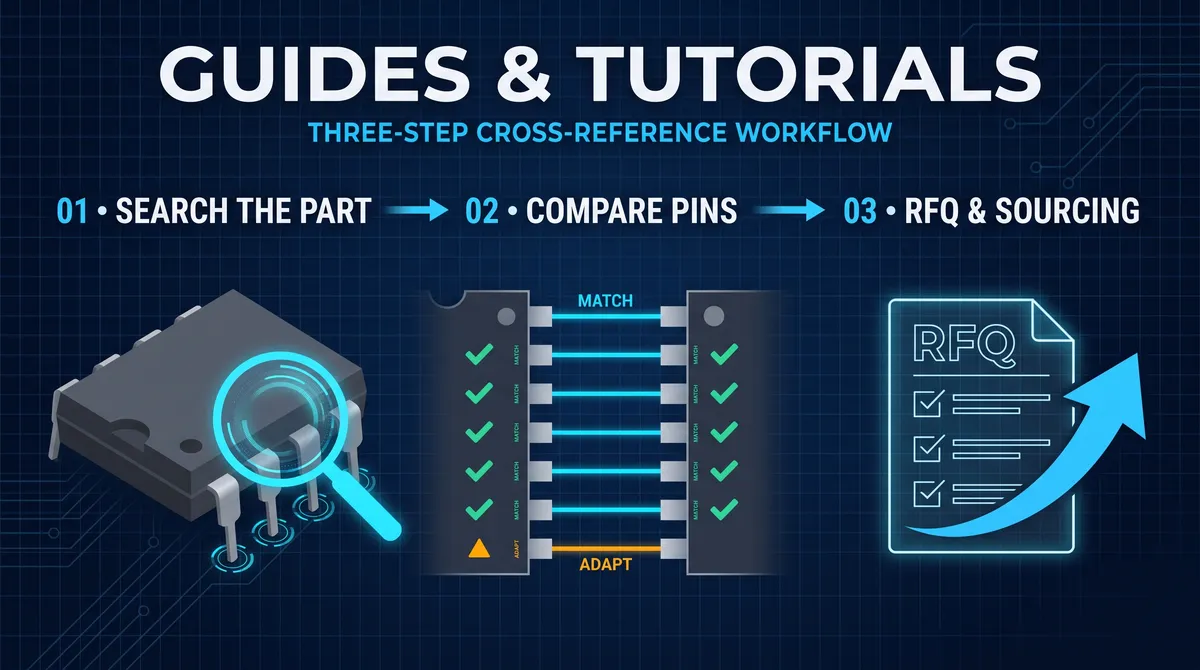
A China IC supplier is any manufacturer, distributor, or exporter in China that supplies integrated circuits to buyers abroad, and the country's place in the semiconductor market has made it the world's largest source of chips by volume and one of the most active sources of the parts buyers search for every day. China produces the leading-edge memories and mature-node controllers that the global electronics industry consumes, it hosts domestic manufacturers who build pin-compatible alternatives to mainstream devices, and it runs the marketplaces and the export channels that put those parts into the hands of buyers everywhere. The sourcing opportunity is real, the domestic alternatives, the price, and the volume, and so is the risk, the counterfeit and the quality variance that every buyer hears about, which is why the professional response is not to avoid China but to source from it with the right discipline. This guide explains the China IC supplier landscape, the types of suppliers, the domestic manufacturers and their alternatives, the risks and how to manage them, and the qualification and verification method that turns a China source into a reliable partner, so that the world's largest chip market becomes a working asset instead of a gamble.
The guide is written for the buyer who wants the value of the Chinese market, the domestic pin-compatible alternatives, the price, and the availability, without importing the risk. The value is concentrated in the parts this site's own catalog lives on: the standard regulators, the logic, the op-amps, the drivers, and the microcontrollers with domestic pin-compatible and code-compatible versions, all of which China supplies at scale. The risk is concentrated in the sourcing channel, the trading companies that list parts they cannot verify, the marketplaces that aggregate the unverified, and the counterfeiters who work the scarce and valuable numbers. The method that captures the value and manages the risk is the same method this site's guides apply everywhere, qualify the source, verify the part, and keep the evidence, and this guide applies it specifically to the China market, where the qualification reads the manufacturer-versus-trader distinction and the verification reads the counterfeit screen, and where the discipline pays the largest dividend because the market is the largest.
The China IC Supplier Landscape
The China IC supplier landscape is a layered market, and reading the layers is the first step in sourcing from it. At the top sit the domestic IC manufacturers, the fabless and foundry companies that design and produce their own chips, the memory and microcontroller makers, the analog and power houses, and the manufacturers of the pin-compatible alternatives that define much of the Chinese export market. Below them sit the authorized and independent distributors, the companies that hold and sell the manufacturers' inventory and the surplus that the authorized channel does not cover. Below those sit the agents and the trading companies, the export offices that source on behalf of foreign buyers and that vary enormously in their verification discipline. At the base sit the marketplaces, Alibaba and its peers, the Huaqiang ecosystem in Shenzhen, and the Chinese electronics distributors like LCSC that aggregate millions of parts into a web catalog. The buyer's qualification reads the layer first, because a manufacturer, a distributor, an agent, and a marketplace each carry a different level of provenance and a different demand for verification, and the method matches the verification to the layer.
The layers also map to the kinds of supply the buyer actually needs. A buyer that needs a specific domestic manufacturer's part, a GD32 microcontroller, a domestic regulator, or a memory, sources from the manufacturer's channel or its authorized distributor, and gets the documentation the manufacturer provides. A buyer that needs a standard catalog part at the best price sources from the distributors and the marketplaces, and applies the verification ladder to the lot. A buyer that needs a scarce, obsolete, or hard-to-find part sources from the independent distributors and the agents who hold the legacy inventory, and applies the fullest verification because the scarce channel is where the counterfeits concentrate. The landscape is not a single market, it is a set of channels for different kinds of supply, and the buyer who reads the layer before the quote sources the right part through the right channel with the right level of caution. The reading is the foundation of the China sourcing method, and it is the reason the phrase china ic supplier names a landscape rather than a company.
How the Chinese semiconductor industry produces ICs at scale
The Chinese semiconductor industry produces ICs at a scale that reshapes the global supply, and understanding its production explains why the market is what it is. China runs the world's largest installed base of mature-node wafer fabs, and it produces the commodity and mid-tier chips, the power, the analog, the logic, the memory, and the microcontrollers, in volumes that the leading-edge fabs in other countries do not prioritize. The domestic manufacturers built their position on exactly the parts that the global industry consumes in quantity, and on the pin-compatible alternatives that let a buyer substitute a domestic part for a mainstream device on the same board, which is the pattern that made the STM32-compatible and the standard-function domestic chips a real market. The production capacity gives the buyer the volume, the price, and the availability that the leading-edge-only supply chains cannot, and it gives the Chinese market its central place in the electronics industry. The buyer who understands the production understands why the parts are cheap and plentiful, and it understands why the domestic alternatives are worth qualifying, because they come from a real, scaled manufacturing base rather than from a trading desk.
Why Buyers Source Integrated Circuits from China
The reasons buyers source integrated circuits from China are the reasons the market grew to its scale, and each reason carries a consequence for the sourcing method. The first reason is price, the Chinese manufacturing base and the labor and infrastructure advantages deliver the same function at a lower unit cost than the leading-edge supply chains, and the buyer who sources the commodity parts from China pays less per unit on every board. The second reason is availability, the Chinese market holds stock of parts, standard and domestic, that the authorized Western channel does not carry, and the buyer who needs a part that is scarce or end-of-life finds it in the Chinese independent channel when the mainstream channel is dry. The third reason is the domestic alternatives, the pin-compatible and code-compatible parts that let a buyer substitute a Chinese part for a mainstream device and preserve the board, which is the specific value this site's catalog trades in. The fourth reason is the speed, the Chinese marketplaces and the export channels quote and ship faster than a global distributor's lead time for many parts. The consequence of all four is that the buyer who sources from China gets value, and the method that protects the value is the qualification and verification discipline that this guide lays out.
The reasons also define the buyer who should source from China and the buyer who should be careful. The buyer who sources standard, mature, and domestic parts in volume, with the ability to verify the lots and qualify the sources, captures the value fully. The buyer who sources the scarce and safety-critical parts without verification discipline imports the risk, because the scarce channel is exactly where the counterfeits concentrate and the safety-critical part cannot tolerate a fake. The professional answer is therefore not a blanket policy about China but a per-part decision: source the commodity and the domestic alternatives from the qualified Chinese channel with the verification ladder, and source the safety-critical and the certified parts from the channels that can prove the certification. The decision is the reason this guide exists, it turns the largest chip market from a source of risk into a source of value by applying the method that the risk demands, and the method is what the rest of this guide delivers.
What buyers look for in a China IC supplier
The buyer looking for a China IC supplier is looking for a set of qualities that the professional sourcing method can verify. The first is the genuine capability, whether the supplier is a manufacturer, an authorized distributor, or a verified independent, rather than a trading company that lists parts it cannot produce or verify, and the distinction is the first filter in every qualification. The second is the verification discipline, whether the supplier tests its lots, runs marking and electrical inspection, and can show the test reports, because a supplier that verifies its own stock protects the buyer before the buyer inspects. The third is the documentation, the certificates of conformance, the lot traceability, the test data, and the manufacturer's documents, because the evidence trail is what lets the buyer trust the lot. The fourth is the export readiness, the experience with export, the Incoterms, the packaging, the documentation, and the compliance, because a supplier that cannot ship cleanly to the buyer's country is a supplier that stalls the line. The fifth is the communication, the engineering answers, the responsive quoting, and the willingness to stand behind the parts, because the relationship is what carries the next order. The buyer looks for these five in every qualification, and the method that checks them is the method this guide provides.
The Types of China IC Suppliers: Manufacturers, Distributors, and Marketplaces
The types of China IC suppliers are distinct, and the qualification reads the type before the price. The IC manufacturer is the top of the supply, the company that designs and produces the silicon, and it supplies its own parts through its channel, with the manufacturer's documentation, and it is the most reliable source of its own brand but the least flexible on price and minimums. The authorized distributor holds the manufacturer's franchise and sells its catalog with the documentation, and it is the reliable source of the branded parts. The independent distributor holds the surplus and the legacy inventory, buys across the market, and varies in verification discipline, and it is the source of the scarce and the hard-to-find parts. The agent and the trading company source on behalf of the buyer, and they range from the professional exporter with a real test and quality process to the desk that lists whatever the market quotes, which is the type that demands the most verification. The marketplace, Alibaba and the Huaqiang ecosystem, aggregates the sellers and shifts the verification onto the buyer. The buyer's strategy is to source the branded parts from the manufacturer's channel, the scarce parts from the verified independents, and the marketplace with the full ladder, and to record the type in the qualification file.
The type also sets the verification expectation, because the provenance of the part follows the type. A manufacturer's own part carries the maker's documentation, and the verification confirms the lot and the grade. An authorized distributor's part carries the franchise, and the verification confirms the channel. An independent's part carries the surplus and the legacy, and the verification runs the full ladder because the provenance is weaker. An agent's part carries whatever the agent can show, and the verification runs the full ladder plus the source audit. A marketplace part carries the seller's listing, and the verification runs the full ladder on every lot. The buyer who matches the verification to the type spends the inspection budget where the provenance is weakest, which is the professional allocation, and it is the reason the type reading is the first step of the qualification rather than an afterthought. The types are the map of the China market, and the verification is the terrain on the map.
How to tell a manufacturer from a trading company in China
Telling a manufacturer from a trading company in China is a first-order qualification, because the two carry completely different provenance and the counterfeits live almost entirely in the trading layer. A manufacturer can show its factory, its production equipment, its wafer or packaging partner, its engineering team, and its own test capability, and it speaks the details of its process, its capacity, and its yield. A trading company can show a catalog, a price list, and a promise, and it speaks the language of the market rather than the language of the process. The qualification reads the signals: a manufacturer answers an engineering question about the die, the process, or the test with specifics, while a trading company answers with the catalog's copy. A manufacturer can produce a test report from its own equipment, while a trading company produces a certificate it bought. A manufacturer has a facility the buyer can visit or audit, while a trading company has an office that may be a mailbox. The buyer who reads the distinction sources the risky parts from the manufacturers and the authorized channel, treats the trading companies with the full verification ladder, and records the distinction in the supplier file, because the difference between the two types is the difference between a part that comes from the process and a part that comes from the market.
The Risks of Sourcing ICs from China and How to Manage Them
The risks of sourcing ICs from China are real, well documented, and manageable, and naming them is the first step in managing them. The first risk is the counterfeit, the recycled, remarked, blacktopped, and cloned parts that concentrate in the scarce and valuable numbers and in the trading layer, and the management is the verification ladder, the visual, electrical, and physical inspection that this site's counterfeit guide describes. The second risk is the quality variance, the domestic parts that meet the datasheet within a wider tolerance or a different grade than the buyer expects, and the management is the electrical verification against the buyer's own specification, not the seller's claim. The third risk is the communication and the specification gap, the translation and the assumption that a part number means the same thing to both sides, and the management is the written specification, the datasheet comparison, and the samples. The fourth risk is the export and the compliance dimension, the Incoterms, the customs, the export controls on the restricted technologies, and the documentation, and the management is the qualified exporter and the compliance review. The fifth risk is the supplier itself, the trading company that takes the order and fails, and the management is the qualification and the payment terms that match the risk. The risks are the reasons the buyer sources with a method, and the method is the counterweight to every risk on the list.
The management of the risks follows the same shape for each: qualify, verify, and record. Qualify the source before the order, reading the type, the capability, the documentation, and the references, and filter the trading layer with the full ladder. Verify the part before the volume, running the visual, electrical, and physical inspection on the samples and the lot, against the datasheet and the buyer's own specification. Record everything, the qualification file, the inspection record, the certificates, and the traceability, so the evidence survives the audit and the dispute. The management also scales with the part's risk: the commodity parts get the sampling and the electrical check, and the safety-critical and the scarce parts get the full ladder and the certified channel. The scale is the professional answer to the risk, and it is the reason a buyer can source from China with confidence, not because the risks are absent but because the method manages them. The method is the entire value of this guide, and it is the same method this site applies to every market.
How to avoid counterfeit ICs when sourcing from China
Avoiding counterfeit ICs when sourcing from China is a matter of channel and verification, and the two work together. Source the risky parts through the verified channel, the manufacturers, the authorized distributors, and the independents with the test capability, and treat the trading companies and the marketplaces with the full verification ladder rather than with trust. Buy at the market price, because the counterfeit is usually the too-cheap quote, and a price far below the market for a scarce part is a warning rather than a bargain. Verify every lot with the visual, electrical, and physical inspection, the marking, the leads, the body, the function, the parameters, the curves, and the X-ray where the risk demands, and compare against the authentic samples and the datasheet. Ask for the documentation and read it critically, the certificate that names the lot, the test report that backs it, and the traceability that reaches a recognizable origin, and treat the document without the evidence as a statement. And report the confirmed counterfeits to the industry databases, because one buyer's finding is the market's warning. The avoidance is not a single gate but a discipline, and the discipline is the difference between a buyer who sources from China with confidence and a buyer who sources from China with hope.
How to Qualify a China IC Supplier
Qualifying a China IC supplier is the highest-leverage step in the sourcing method, and it runs the same discipline the buyer applies to any source, tuned to the Chinese market. Start with the identity, the registered company, the license, the years of trading, the specialization, and the facilities, and confirm the supplier exists as a real business rather than as a catalog. Read the type, the manufacturer, the distributor, the agent, or the trading company, and set the verification expectation to match. Read the verification capability, whether the supplier tests its lots, runs marking and electrical inspection, and can show the test reports, and visit or audit the facility where the risk justifies it. Read the documentation, the certificates that name the lot, the test data that backs them, and the traceability, and read the export experience, the Incoterms, the shipping history, and the compliance. And run the sample transaction, a small order with the full inspection and the evaluation of the response, because a supplier that ships a verified sample and answers the engineering questions is a supplier worth scaling. The qualification file records all of it, and the file is the artifact that makes the China source a documented partner rather than a gamble.
The qualification also reads the Chinese market's specific signals, because the signals that are routine in one market are meaningful in another. A supplier that holds real inventory in a real warehouse is different from a supplier that lists what the market quotes, and the buyer can ask for the inventory location and verify the stock. A supplier that can name its upstream, the wafer source, the packaging house, and the test house, is different from a supplier that cannot, and the upstream naming is the provenance that the qualification wants. A supplier that participates in the export market with a track record, the shipping history, the references, and the export documents, is different from a supplier that is new to export, and the track record is the evidence of the relationship. The Chinese market has its own due diligence, and the buyer who runs it, the registration, the inventory, the upstream, and the track record, sources from China with the same evidence base as any market. The qualification is the first gate, and the verification is the second, and together they are the method that this guide delivers.
What documents to request from a China IC supplier
The documents to request from a China IC supplier are the documents that prove the supply, and they are worth listing because the Chinese market runs on its own paperwork. Request the business registration and the export license, to confirm the supplier is a real, registered exporter. Request the manufacturer's documents where the part is branded, the datasheet, the COO or the certificate of origin, and the manufacturer's own test data. Request the certificate of conformance that names the lot, the test report that shows the inspection, and the lot traceability that reaches the source. Request the shipping and the customs documents, the invoice, the packing list, the bill of lading, and the export declaration, to confirm the goods match the order and the origin. And request the compliance documents, the RoHS and REACH statements where they apply, and the restricted-material declarations, because the export compliance is part of the supply. Each document is read against the order, the part number, the lot, the quantity, and the origin, and a document that does not match the order is a warning. The document package is the supplier's evidence trail, and the buyer who collects and reads it sources from China with the same documentation standard as any market.
How to Verify Parts from a China IC Supplier
Verifying parts from a China IC supplier runs the same ladder that protects every critical buy, and it is the gate that the Chinese market's risks demand. Run the visual inspection on the incoming lot, the markings, the leads, the body, and the packaging, under magnification, against the authentic samples and the manufacturer's marking diagram, and catch the recycled, remarked, and blacktopped parts at the cheapest rung. Run the electrical verification on the risky lots, the functional and the parametric test against the datasheet and the buyer's own specification, and the curve comparison that identifies the silicon, and catch the clones and the quality variance that the visual misses. Run the physical inspection on the risky and the valuable lots, the X-ray and the decapsulation, and confirm the die matches the authentic layout. The verification scales with the risk, the commodity parts get the sampling, and the safety-critical and the scarce parts get the full ladder, and the scale is the rule that keeps the cost proportionate. The verification record, the photographs, the test data, and the X-ray images, is the evidence that moves the lot to production, and it is the record that the buyer keeps with the order.
The verification also reads the buyer's own specification rather than the seller's claim, which is the correction for the quality variance risk. The buyer's specification states the operating range, the timing, the output, and the tolerance that the board requires, and the verification tests the lot against that specification, not merely against the datasheet the seller provided. A domestic part that meets its own datasheet within a wider tolerance than the buyer's board can tolerate fails the buyer's verification, and the buyer knows before production rather than after. The specification-based verification is the difference between buying a part and buying a part that works, and it is the reason the buyer sources the domestic alternatives with the datasheet comparison and the samples rather than with the number alone. The verification is the gate that the Chinese market's value and risk both demand, and it is the method that lets a buyer source the domestic pin-compatible alternatives with confidence, because the part is proven against the board, not just against the listing.
How to test a sample from a China IC supplier
Testing a sample from a China IC supplier is the buyer's referee before the volume, and it runs the same sequence every time. Request the samples from the actual production lot, not from a pre-selected unit, so the sample represents the batch the buyer will receive. Take the samples through the visual inspection and the electrical test against the buyer's specification and the datasheet, the function, the parameters, the curves, and the temperature behavior, and compare the measurements to the authentic sample and to the original part the domestic alternative replaces. Mount the sample in the actual board or the test fixture, run the production test and the thermal stress pass, and confirm the behavior in the circuit, not just on the bench. For the risky lot, add the physical inspection, the X-ray of the die, and compare it to the authentic layout. The sample test converts the supplier's claim into the buyer's evidence, and it is the step that catches the quality variance and the counterfeit that the documents cannot reveal. A sample that passes is the authorization for the volume, and a sample that fails is the end of the candidate, with the record kept either way.
Sourcing Through the Chinese Marketplaces: Alibaba, LCSC, and Huaqiang
The Chinese marketplaces put the market's breadth in a search box, and using them well is a skill with its own rules. Alibaba and the B2B marketplaces aggregate the suppliers, the manufacturers, the distributors, and the trading companies, and they carry the widest range and the widest quality variance, so the buyer treats every listing as a lead to be qualified and verified rather than as a source to be trusted. LCSC and the web distributors of the Chinese components ecosystem aggregate the real stock of the distributors with the datasheets, the parametric search, and the pricing, and they are the closest thing the Chinese market has to the authorized channel online, so they are the right place to start for the standard parts and the domestic alternatives. The Huaqiang ecosystem in Shenzhen, the physical market and its web extensions, is the source of the surplus, the legacy, and the hard-to-find parts, and it is the channel that demands the fullest verification because the provenance is the thinnest. The marketplace method is the method of this guide, qualify the seller, verify the lot, and keep the evidence, applied to the seller's listing, the seller's rating, the seller's history, and the seller's documents, and it is the method that turns the marketplace from a gamble into a search.
The marketplace also carries the payment and the dispute dimension that the buyer manages as part of the sourcing. Use the platform's secured payment and the escrow where it exists, so the funds are released on the inspection rather than on the shipment. Read the seller's rating and the review history, the volume, the positive rate, and the complaints, and treat a seller with no history as a new risk to be verified. Read the shipping terms and the Incoterms, and confirm the duties and the customs handling before the order, so the landed cost is known. And use the platform's dispute process for the documented failure, with the inspection record as the evidence. The marketplace sourcing is the same method as the direct sourcing, with the platform's mechanisms as the extra layer, and the buyer who uses them sources from the marketplaces with the same discipline as from the direct channels. The marketplaces are the market's breadth, and the method is the discipline that makes the breadth usable.
How to use a Chinese distributor catalog for parametric search
The Chinese web distributors build their catalogs around the parametric search, and using it well finds the parts the market actually has. Filter by the function, the package, the supply range, the output, and the speed, the same parameters the design needs, and the catalog returns the stock that meets the filter, the standard parts and the domestic alternatives together. Read the stock and the price beside the datasheet, because the Chinese catalog shows the availability and the cost in the same row, and the buyer sources the parts the design needs at the price the market sets. Check the packaging and the minimums, because the Chinese distributor ships the reel and the tube that the assembly line needs, and the MOQ matters as much as the price. And read the datasheet links, because the catalog is only as good as the document it carries, and the buyer verifies the part against the datasheet and the buyer's own specification before the order. The parametric search is the Chinese market's strength, and the discipline of verifying the result against the datasheet is the strength's guard, which is the reason the catalog sourcing is the safe first stop for the standard and the domestic parts.
A Workflow for Sourcing Integrated Circuits from China
The full method fits into a workflow that any buyer runs in the same order. First, map the need, the part, the function, the specification, the volume, and the risk, and set the channel, the manufacturer, the distributor, or the marketplace, to the part's type. Second, qualify the supplier, the identity, the type, the verification capability, the documentation, the export experience, and the references, and run the sample transaction before the volume. Third, verify the part, the visual, electrical, and physical inspection against the datasheet and the buyer's own specification, and scale the ladder to the risk. Fourth, manage the terms, the payment, the shipping, the Incoterms, and the compliance, with the secured payment and the documented order. Fifth, record everything, the qualification file, the inspection record, the certificates, the traceability, and the shipping documents, and update the supplier file and the part's cross-reference. Sixth, review, the supplier's performance, the counterfeit rate, the quality variance, and the delivery, quarterly, and raise or drop the supplier on the evidence. That sequence is the China sourcing method, and it is the same method whether the part is a standard regulator, a domestic microcontroller, or a scarce legacy device.
The workflow is the reason the phrase china ic supplier does not have to mean a risk. With the landscape mapped, the buyer knows which channel serves the part. With the supplier qualified, the buyer knows the source is real. With the part verified, the buyer knows the lot is authentic and meets the specification. And with the terms and the records managed, the buyer knows the order will arrive cleanly and the evidence will survive the audit. The entire value of the method is that the world's largest chip market, with its manufacturers, its distributors, its domestic alternatives, and its marketplaces, is sourced with the same evidence, verification, and qualification discipline as any market, and that discipline is what lets a buyer capture the value of the Chinese market without importing its risk. A buyer who runs this workflow sources integrated circuits from China with a qualified partner, a verified lot, and a documented record, which is the entire point of choosing a China IC supplier well.
Not sure which sensor fits your project?
Talk to our mmWave application engineers for a free consultation.
Specify your hotel project with our engineers
Send your room count, ceiling type, and protocol preference. We will return a sample plan and quote within 24 business hours.
- Move from general guidance into a product or application discussion.
- Use RFQ when pricing, drawings, MOQ, or launch timing needs structure.
- Keep a direct contact path visible for fast clarifications and handoff.