Arduino MCU Replacement: ATmega328P vs STM8S vs STM32F103 for Your Next Project
Compare ATmega328P, STM8S, and STM32F103 as Arduino MCU replacements. Find the right MCU for your project with our detailed pinout, specs, and ecosystem guide.
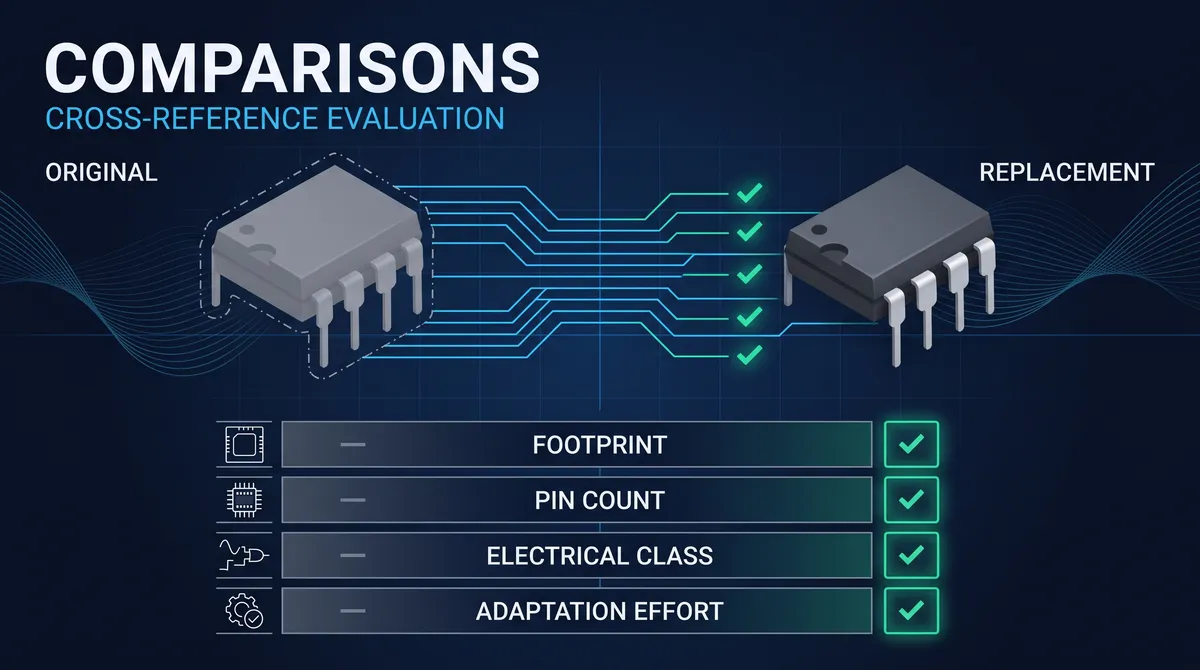
Arduino MCU Replacement: ATmega328P vs STM8S vs STM32F103 for Your Next Project
When selecting an MCU replacement for Arduino-based designs, engineers face a critical decision that impacts performance, development time, and long-term product viability. The ATmega328P established the 8-bit standard that powers millions of Arduino Uno boards worldwide, but the STM8S family and STM32F103 Cortex-M3 processor represent compelling alternatives that address different project requirements. Understanding the trade-offs between these three architectures requires examining clock speeds ranging from 16 MHz to 72 MHz, memory configurations from 2KB to 128KB, power consumption profiles varying by orders of magnitude, and the often-overlooked factor of ecosystem maturity. This comprehensive comparison provides the technical depth needed to make an informed MCU replacement for Arduino selection, whether you are optimizing for cost-sensitive consumer products, performance-demanding industrial controllers, or power-constrained battery applications.
The Arduino MCU Replacement Landscape: Why Engineers Seek Alternatives
The search for an effective MCU replacement for Arduino projects has intensified as industries demand more processing power, better energy efficiency, and enhanced connectivity options that the original ATmega328P architecture cannot provide. While the ATmega328P remains an excellent entry point for learning and prototyping, commercial product development increasingly requires microcontrollers that offer higher computational throughput, larger memory footprints, and integrated peripherals found only in modern 32-bit architectures. Engineers evaluating replacement options must consider not just the raw specifications of alternative microcontrollers but also the complete development ecosystem, including compiler support, debugging tools, pre-existing driver libraries, and long-term availability guarantees from manufacturers.
The three microcontrollers examined in this guide represent distinct positions on the cost-performance-power tradeoff curve, each addressing specific market segments that partially overlap with Arduino applications. The ATmega328P, produced by Microchip Technology, continues to serve as the de facto baseline for 8-bit Arduino compatibility, offering straightforward migration paths for existing codebases while providing reference performance metrics against which alternatives are measured. The STM8S family from STMicroelectronics delivers a middle ground with enhanced peripherals and competitive pricing, targeting cost-optimized industrial and consumer applications. The STM32F103 occupies the high-performance segment, bringing 32-bit processing capabilities and extensive connectivity options that enable sophisticated IoT and embedded control applications previously impractical on 8-bit platforms.
ATmega328P: The Reference Standard for Arduino MCU Replacement Decisions
The ATmega328P serves as the foundational reference point for any discussion of MCU replacement for Arduino applications, not merely because of its ubiquity but because its specifications define the baseline expectations against which competing microcontrollers are evaluated. This 8-bit AVR architecture microcontroller operates at a maximum clock frequency of 20 MHz, though Arduino boards typically run at 16 MHz to maintain compatibility with timing-sensitive libraries and communication protocols. The chip provides 32KB of flash program memory, 2KB of SRAM, and 1KB of EEPROM, specifications that remain adequate for many embedded control applications but impose meaningful constraints on code complexity and data handling capabilities.
Power consumption characteristics make the ATmega328P particularly suitable for battery-powered applications where wake-sleep cycle management can extend single-cell operation to months or years. At 3.3V and 8 MHz, the processor typically draws approximately 3 mA during active operation, dropping to 0.1 μA in the lowest power sleep mode with active wake-up detection. These figures compare favorably with many 32-bit alternatives when clock speeds are properly managed, though the limited processing capability per clock cycle means some tasks require proportionally more active time, partially offsetting the power advantage. The microcontroller operates across a voltage range of 1.8V to 5.5V, simplifying power supply design for projects migrating from 5V Arduino logic levels to modern 3.3V sensor ecosystems.
ATmega328P Pinout and Peripheral Configuration
The ATmega328P packages its functionality across 28 pins in the standard DIP configuration, with 23 general-purpose I/O pins that double as alternate function carriers for the integrated peripherals. The pinout arrangement reflects the evolution of AVR architecture over multiple product generations, with care taken to maintain backward compatibility with earlier ATmega variants while adding critical new peripherals. Understanding this pin configuration becomes essential when evaluating MCU replacement options, as pin-compatible alternatives can dramatically simplify board redesign and software migration efforts.
| Parameter | ATmega328P Specification |
|---|---|
| Core Architecture | 8-bit AVR |
| Max Clock Speed | 20 MHz (16 MHz Arduino) |
| Flash Memory | 32KB |
| SRAM | 2KB |
| EEPROM | 1KB |
| GPIO Pins | 23 |
| ADC Channels | 6 (10-bit) |
| PWM Outputs | 6 |
| UART Interfaces | 1 |
| SPI Interfaces | 1 |
| I2C Interfaces | 1 |
| Operating Voltage | 1.8V – 5.5V |
| Active Current (8MHz) | 3 mA @ 3.3V |
| Sleep Current | 0.1 μA |
The peripheral set includes two 8-bit timers with PWM capability, one 16-bit timer suitable for precision capture and waveform generation, a single UART for RS-232 style serial communication, an SPI interface supporting high-speed peripheral interconnection, and an I2C interface for communication with sensors and display modules. The 6-channel 10-bit analog-to-digital converter provides sufficient resolution for most sensor reading applications, though the single-ended configuration limits noise rejection compared to differential ADC architectures found in more sophisticated microcontrollers. The absence of USB hardware support means Arduino boards implement USB-to-serial conversion through external components like the ATmega16U2, adding cost and complexity while limiting maximum communication speeds.
STM8S Family: A Cost-Effective MCU Replacement for Arduino Industrial Applications
The STM8S microcontrollers from STMicroelectronics represent a strategic MCU replacement for Arduino projects requiring enhanced computational capabilities while maintaining competitive pricing and robust industrial-grade reliability. This 8-bit architecture, based on the proprietary ST8 core, delivers approximately twice the instructions per clock cycle compared to classic AVR processors, effectively doubling the throughput at equivalent clock frequencies. The STM8S105 series, with its 16 MHz maximum clock speed, provides performance characteristics that roughly match a 32 MHz ATmega328P while consuming comparable power, making it attractive for applications where the existing Arduino codebase can be optimized to run within the available cycles.
Memory configurations in the STM8S family range from 4KB to 32KB of flash and 1KB to 2KB of RAM depending on the specific variant, with the mid-range STM8S105K4 offering 16KB flash and 2KB RAM at price points competitive with the ATmega328P. The larger flash memory accommodates more sophisticated firmware without requiring external storage, while improved code density from the ST8 instruction set reduces memory pressure for equivalent functionality. Engineers considering this as an MCU replacement for Arduino projects should note that STM8S devices operate from 3.0V to 5.5V, with most pins tolerating 5V input even when running at 3.3V, simplifying integration with existing Arduino shields and 5V sensors.
STM8S Peripheral Advantages Over ATmega328P
The peripheral set available on STM8S microcontrollers represents a meaningful upgrade from the ATmega328P, with enhancements particularly relevant for industrial control and communication-intensive applications. The advanced timer architecture includes a 16-bit timer with complementary PWM outputs and dead-time insertion capability, enabling direct control of three-phase motor drivers without external logic. Four PWM channels with independent duty cycle and frequency control support more complex power control schemes than the dual-timer arrangement found in ATmega devices.
| Parameter | STM8S105K4 Specification |
|---|---|
| Core Architecture | 8-bit ST8 |
| Max Clock Speed | 16 MHz |
| Flash Memory | 16KB |
| RAM | 2KB |
| EEPROM | 1KB (data) |
| GPIO Pins | 25 |
| ADC Channels | 7 (10-bit) |
| PWM Outputs | 6 (advanced) |
| UART Interfaces | 1 |
| SPI Interfaces | 1 |
| I2C Interfaces | 1 |
| Operating Voltage | 3.0V – 5.5V |
| Current Consumption | 2.5 mA @ 8 MHz, 3.3V |
| Brown-out Detection | Programmable 2.6V – 4.2V |
The STM8S includes a windowed watchdog timer that resets the processor if code execution stalls, a brown-out detector with programmable trip points to protect against supply voltage fluctuations, and an auto-wakeup timer that brings the device out of halt mode at predetermined intervals. These features address industrial application requirements often absent from hobbyist-focused microcontrollers, making the STM8S a credible MCU replacement for Arduino projects targeting commercial deployment. The I2C peripheral implements address recognition hardware that reduces CPU overhead during multi-device communication, while the UART includes fractional baud rate generation for precise communication timing across a wide range of standard speeds.
STM32F103: High-Performance 32-Bit MCU Replacement for Demanding Arduino Projects
The STM32F103 Cortex-M3 microcontroller stands in a different performance class than the 8-bit alternatives, offering a compelling MCU replacement for Arduino projects where processing capability, memory resources, and connectivity options represent the primary selection criteria. Operating at frequencies up to 72 MHz with single-cycle multiply and hardware division instructions, the STM32F103 delivers approximately 90 DMIPS of computational throughput, representing a 10x improvement over the ATmega328P at equivalent clock ratios. This performance margin enables complex signal processing, communication protocol handling, and control algorithm execution that would tax or exceed the capabilities of 8-bit architectures.
Memory configurations in the STM32F103 lineup span from 16KB to 128KB of flash and 6KB to 20KB of SRAM depending on the variant, with the popular STM32F103C8T6 offering 64KB flash and 20KB SRAM at price points that approach the cost of ATmega328P in high-volume production. The Harvard architecture with separate instruction and data buses enables simultaneous fetch and execution in many code patterns, while the 3-stage pipeline reduces average cycles per instruction despite the higher complexity of 32-bit operations. Engineers evaluating this as an MCU replacement for Arduino should recognize that the performance advantage comes with increased power consumption at maximum clock speeds, though dynamic voltage scaling and multiple sleep modes enable competitive power budgets for duty-cycled applications.
STM32F103 Advanced Peripherals for Complex Applications
The peripheral complement of the STM32F103 reflects its positioning as a microcontroller suitable for sophisticated embedded applications, with features that simplify board design while enabling functionality impractical on simpler 8-bit platforms. The integrated USB 2.0 full-speed peripheral supports direct device connection without external transceivers, enabling USB HID, CDC, and custom device implementations that eliminate the need for USB-to-serial bridge chips in many designs. The CAN 2.0B controller provides industrial communication capabilities increasingly demanded in automotive and industrial automation applications.
| Parameter | STM32F103C8T6 Specification |
|---|---|
| Core Architecture | 32-bit ARM Cortex-M3 |
| Max Clock Speed | 72 MHz |
| Flash Memory | 64KB |
| SRAM | 20KB |
| GPIO Pins | 37 (80-pin package) |
| ADC Channels | 10 (12-bit, 1μs) |
| PWM Outputs | 16 (16-bit timers) |
| UART Interfaces | 3 |
| SPI Interfaces | 2 |
| I2C Interfaces | 2 |
| USB Interface | 1 (full-speed) |
| CAN Interface | 1 (2.0B) |
| Operating Voltage | 2.0V – 3.6V |
| Current Consumption | 36 mA @ 72 MHz, 3.3V |
| Sleep Mode Current | 2 μA (stop mode) |
The 12-bit analog-to-digital converter achieves 1 MSPS conversion rates with hardware scanning and DMA transfer, eliminating CPU involvement in continuous data acquisition from multiple sensors. Seven general-purpose 16-bit timers support complementary PWM outputs with dead-time insertion for motor control, while the advanced timer provides full motor control functionality including encoder interface modes. The real-time clock with dedicated power domain maintains accurate timekeeping with battery backup while the main processor sleeps, enabling timestamp logging and scheduled wake-up functionality essential for data logger and smart sensor applications.
Pinout Compatibility and Migration Challenges Across MCU Platforms
Physical pinout considerations significantly influence the practical viability of MCU replacement for Arduino designs, particularly for projects that must integrate with existing shield ecosystems or maintain form factor compatibility with established development platforms. The ATmega328P in its DIP-28 package establishes the baseline pin arrangement, with 14 analog and digital pins arranged along the edges and power/ground connections at the top and bottom. Direct pin-compatible replacements exist from Microchip within the ATmega series, but cross-architecture replacements like the STM8S and STM32F103 require board redesign and careful signal routing analysis.
The STM8S family uses packages ranging from 20-pin to 48-pin configurations, with pin counts and dimensions that partially align with ATmega alternatives but require different pin multiplexing configuration due to the alternate peripheral assignments. The STM32F103C8T6 in its 48-pin LQFP package provides 37 GPIO pins but with physical dimensions and pin spacing that preclude direct replacement of through-hole components. Engineers targeting form-factor compatibility should consider the various STM32 "Blue Pill" and "Black Pill" development boards that implement standard Arduino header layouts, enabling shield compatibility with 32-bit performance while accepting the board-level replacement approach rather than true chip-level compatibility.
Migration complexity varies dramatically based on the existing codebase and peripheral usage patterns within the original Arduino implementation. Code relying exclusively on Arduino library functions can often be retargeted through library porting layers available for both STM8 and STM32 platforms, with varying degrees of API compatibility and performance implications. Direct register manipulation code requires complete rewrite, as the peripheral control registers and interrupt handling mechanisms differ substantially between AVR, ST8, and ARM architectures. The STM32 hardware abstraction layer provided by STMicroelectronics standardizes peripheral configuration across the STM32 family, simplifying migration between STM32 variants but providing limited assistance for legacy AVR code conversion.
Development Ecosystem and Toolchain Considerations
The development ecosystem surrounding each microcontroller platform significantly impacts productivity during initial development and long-term maintenance, making ecosystem maturity a critical factor in MCU replacement for Arduino selection. The ATmega328P benefits from the mature Arduino ecosystem, with thousands of community-contributed libraries, extensive documentation, and broad community support that accelerates development while reducing learning curves for new team members. PlatformIO and Arduino IDE support enable rapid prototyping workflows that many engineers have standardized into their daily practice, while professional-grade development environments like Atmel Studio provide advanced debugging capabilities for commercial development.
STM8 development traditionally relied on ST's proprietary Cosmic C compiler with code size limitations for the free edition, though GCC-based toolchains have matured significantly and now offer robust compilation capabilities without usage restrictions. The STM8 Standard Peripheral Library provides register-level abstractions that simplify peripheral initialization and control, though the library lacks the comprehensive middleware stacks found in STM32 offerings. Community support for STM8 remains smaller than Arduino, with fewer open-source libraries and less documentation, requiring more internal engineering effort for complex implementations. The ST-LINK programmer/debugger hardware costs approximately the same as Arduino clones, making toolchain expenses manageable for most project budgets.
STM32 development benefits from one of the most comprehensive embedded ecosystems available, with the STM32CubeIDE providing a complete development environment based on Eclipse with integrated debugger support, code generation tools, and peripheral configuration utilities. The STM32CubeMX code generator dramatically reduces initialization code development time by providing graphical configuration of clocks, peripherals, and pin assignments with automatic code generation for startup routines and interrupt handlers. HAL (Hardware Abstraction Layer) and LL (Low-Layer) drivers offer different abstraction levels, with LL providing near-register performance for time-critical code while HAL offers portability across STM32 variants. The extensive middleware portfolio includes USB device and host stacks, TCP/IP networking with lwIP, FreeRTOS integration, and file system implementations that accelerate complex application development.
Power Consumption Analysis for Battery-Powered Applications
Power consumption characteristics often determine MCU replacement for Arduino suitability in portable and battery-powered applications, where energy availability constrains operational lifetime and duty cycling requirements. The ATmega328P achieves competitive power efficiency at low clock frequencies due to the simplicity of its 8-bit architecture and the availability of multiple sleep modes with fine-grained control over active peripherals. Battery life calculations must account for active current draw during processing bursts, idle current during waiting periods, and sleep current during extended dormancy, with the transition times between states significantly impacting overall energy consumption.
The STM8S demonstrates improved efficiency over the ATmega328P for workloads that benefit from the higher instructions-per-cycle performance, requiring less active time for equivalent computational tasks. The halt and wait-for-interrupt modes provide lower sleep currents than comparable AVR sleep modes, with the auto-wakeup timer enabling periodic processing without full active mode transitions. For applications with low-duty-cycle requirements, such as environmental monitoring sensors that wake hourly to take readings, the STM8S power advantages compound over time as the percentage of sleep time increases.
The STM32F103 power consumption profile reflects its high-performance positioning, with active currents of 36 mA at maximum frequency substantially higher than 8-bit alternatives. However, the dynamic efficiency (DMIPS per milliwatt) often favors the STM32F103 for compute-intensive workloads where the reduced active time offsets higher peak currents. The variety of low-power modes, including sleep, stop, and standby states with currents ranging from microamps to nanoamps, enables effective power management for battery applications when the CPU can spend most of time in deep sleep. The real-time clock and backup registers maintain state during standby with only 3 μA consumption from the dedicated VBAT domain, enabling multi-year battery operation for applications with appropriate duty cycling.
| MCU | Active Current | Idle Current | Sleep Current | Stop Current | Standby Current |
|---|---|---|---|---|---|
| ATmega328P @ 16MHz | 9 mA @ 5V | 2.5 mA | 0.1 μA | N/A | N/A |
| STM8S105 @ 16MHz | 5 mA @ 3.3V | 1.5 mA | 0.5 μA | N/A | N/A |
| STM32F103 @ 72MHz | 36 mA @ 3.3V | 12 mA | 2.4 mA | 2 μA | 3 μA (VBAT) |
Real-World Application Suitability Assessment
Evaluating MCU replacement for Arduino suitability requires matching technical specifications to application requirements, with factors beyond raw performance often determining the optimal choice for specific use cases. The ATmega328P remains the appropriate selection for educational environments, rapid prototyping scenarios, and applications where existing Arduino codebases provide substantial value that outweighs performance limitations. The simplicity of the 8-bit architecture and the extensive tutorial ecosystem reduce barriers to entry for new engineers while the vast library availability accelerates development of common functions like sensor interfacing and display control.
Industrial control applications benefit from STM8S enhanced peripherals and industrial temperature range availability, with the advanced timer features supporting motor control and power conversion implementations that would require external circuitry on ATmega328P-based designs. The cost competitiveness of STM8S in mid-volume production makes it attractive for commercial products where the performance improvement over ATmega328P justifies the migration effort while the complexity of STM32 development exceeds project requirements. The STM8S programming ecosystem, while less mature than Arduino, provides sufficient tooling for production deployment with appropriate debugging capabilities.
Complex applications requiring USB connectivity, multiple communication channels, digital signal processing, or extensive memory resources represent natural applications for STM32F103, where the architectural advantages translate to reduced external component counts and simplified software implementation. The integrated USB peripheral eliminates the need for external USB-to-serial bridges in many designs, while the multiple UART and SPI channels enable communication with diverse sensor and display modules without pin-multiplexing complexity. Applications that would strain ATmega328P resources, such as data loggers storing to SD cards, network-connected sensors with embedded web servers, or closed-loop controllers with sophisticated algorithms, find natural solutions in STM32F103 capabilities.
Software Migration Strategies and Porting Considerations
Migrating existing Arduino code to alternative microcontrollers requires systematic evaluation of the codebase dependencies, from core language features and standard library functions to third-party library usage and peripheral access patterns. The Arduino framework abstracts hardware details behind a consistent API that varies in implementation between platforms, with varying degrees of compatibility when code targets different architectures. Projects composed primarily of high-level Arduino function calls like digitalWrite, analogRead, and Serial.print have the highest portability, while code relying on direct port manipulation, timer registers, or ATmega-specific peripherals requires more substantial modification.
Porting to STM8 platforms benefits from the Arduino STM8 core maintained by the community, which provides compatible implementations of the standard Arduino API for most common functions and enables straightforward execution of existing sketches on STM8 hardware. However, the STM8 core supports only a subset of the extensive Arduino library ecosystem, requiring evaluation of each third-party library used in the original design. Libraries interfacing with specific peripherals like hardware SPI or I2C may require modification for STM8 register compatibility, while libraries dependent on timing-sensitive features like certain PWM modes may need complete reimplementation.
STM32 platforms enjoy broader library support through the STM32Duino project, which provides comprehensive Arduino API compatibility including most core functions and a substantial subset of popular community libraries. The STM32 HAL compatibility layer maps Arduino functions to appropriate STM32 peripherals with varying degrees of performance optimization, enabling many existing sketches to run without modification on appropriate STM32 variants. Performance-critical applications may benefit from direct register access or HAL usage rather than Arduino abstraction layers, trading development convenience for execution efficiency. The STM32 ecosystem also supports native ARM development through mbed OS, Zephyr, FreeRTOS, and other embedded operating systems for applications requiring task scheduling, networking stacks, or sophisticated software architectures.
Supply Chain Considerations and Long-Term Availability
Commercial product development demands attention to supply chain stability and long-term microcontroller availability, factors that influence MCU replacement for Arduino decisions beyond pure technical merit. The ATmega328P benefits from its position as a mature product with multiple sources, as Microchip acquired Atmel and continues production alongside alternative manufacturers offering compatible devices. The Multi-Chip Project initiative from major distributors ensures availability commitments for years ahead, though commodity pricing pressures have caused some older AVR variants to approach end-of-life status in recent years.
The STM8S family represents a relatively newer product line with strong commitment from STMicroelectronics, though the STM8 architecture occupies an unusual market position between legacy 8-bit microcontrollers and the overwhelmingly dominant ARM Cortex-M ecosystem. ST has invested in STM8 ecosystem development, suggesting continued support for the platform, but the absence of STM8 in many new design starts raises questions about long-term volume sustainability. Engineers selecting STM8S should verify distributor stock levels, manufacturing lead times, and any public statements from ST regarding product lifecycle before committing to high-volume production.
The STM32F103 benefits from the overwhelming market success of the STM32 family, with STMicroelectronics investing heavily in new process technologies and architecture improvements that ensure continued relevance of the platform for years to come. The STM32 ecosystem spans from ultra-low-power STM32L0 variants through high-performance STM32H7 parts, ensuring that investment in STM32 development skills transfers across the product range. The STM32F103 specifically may eventually see reduced attention as ST focuses development on more modern cores like Cortex-M4 and Cortex-M33, but the installed base and manufacturing volume should ensure availability for at least a decade given typical embedded product lifecycle expectations.
Cost Analysis and Volume Pricing Considerations
Total cost of ownership for MCU replacement for Arduino decisions encompasses not just unit pricing but development time, tooling costs, production complexity, and field support requirements that vary across microcontroller options. The ATmega328P offers the lowest entry cost with Arduino Nano boards available for under $3 in single quantities and the complete development environment available free of charge. However, the limited resources require more sophisticated external component integration for complex applications, potentially offsetting microcontroller savings with additional hardware costs.
STM8S pricing in production quantities approaches ATmega328P levels, with per-unit costs below $1 for the STM8S105K4 in volumes exceeding 10,000 units. Development tooling costs remain low with affordable ST-Link programmers and free compiler toolchains, while the moderate learning curve requires engineering investment that should be amortized across production volumes. The enhanced peripheral integration can reduce external component counts compared to ATmega328P implementations, potentially improving board cost even if the microcontroller itself costs slightly more.
The STM32F103C8T6 achieves pricing below $2 in production quantities despite its substantially enhanced capabilities, representing excellent value for applications that can leverage its features. The higher pin count and finer pitch packages may increase PCB manufacturing costs compared to through-hole alternatives, though this trend reverses for complex applications where the integrated peripherals eliminate external components that would otherwise be required. Development toolchain costs remain reasonable with free STM32CubeIDE and low-cost ST-Link debug probes, though the learning curve may extend development timelines for teams unfamiliar with ARM development workflows.
| Cost Factor | ATmega328P | STM8S105 | STM32F103C8 |
|---|---|---|---|
| Unit Price (1K) | $1.45 | $1.20 | $1.80 |
| Unit Price (10K) | $0.85 | $0.72 | $1.15 |
| Unit Price (100K) | $0.52 | $0.45 | $0.72 |
| Dev Board Cost | $3-15 | $5-15 | $3-20 |
| Programmer Cost | $2-10 | $8-15 | $8-20 |
| Compiler Cost | Free | Free (GCC) | Free (CubeIDE) |
Performance Benchmarks and Computational Capability Comparison
Quantitative performance comparison requires benchmark testing that reflects representative workloads rather than marketing specifications, as theoretical DMIPS figures may not correlate directly with real-world application performance. The Dhrystone benchmark provides standardized measurement of integer computational throughput, with results typically normalized to 1 DMIPS per 175 clock cycles across different architectures. The ATmega328P achieves approximately 16 MHz divided by approximately 8 cycles per instruction, yielding roughly 2 DMIPS at its nominal 16 MHz clock. The STM8S with its approximately 2 instructions per clock achieves approximately 4 DMIPS at 16 MHz, doubling the throughput for equivalent clock speeds.
The STM32F103 with its 72 MHz clock and single-cycle multiply instruction achieves approximately 90 DMIPS, representing roughly a 22x improvement over ATmega328P and 11x improvement over STM8S for computationally intensive workloads. This advantage compounds for algorithms requiring multiplication, division, or floating-point operations where the 32-bit architecture and hardware math support dramatically reduce instruction counts. However, many embedded applications spend substantial time waiting for I/O operations, peripheral responses, or external events, reducing the effective performance advantage when CPU-bound execution represents only a small fraction of total operation time.
Memory bandwidth becomes increasingly important for data processing applications, where the STM32F103 Harvard architecture with separate instruction and data buses provides advantages for code that accesses large data structures. The 72 MHz bus frequency compared to 16 MHz in the 8-bit alternatives improves memory access latency and DMA throughput, benefiting applications like audio processing, sensor data logging, or communication protocol handling that move substantial data between memory and peripherals. The larger SRAM capacity of STM32F103, at 20KB compared to 2KB, enables more sophisticated algorithms and larger data buffers without the bank-switching complexity required in memory-constrained systems.
Community Support and Documentation Quality
Engineering productivity correlates strongly with the availability and quality of community support and documentation, factors that influence MCU replacement for Arduino selection beyond pure technical merit. The Arduino ecosystem surrounding ATmega328P provides unparalleled community resources, including thousands of tutorial articles, video courses, forum discussions, and open-source project examples that accelerate learning and problem resolution. The maturity of the platform means most common questions have been answered multiple times across various forums, with documentation quality varying from excellent community-contributed guides to outdated information from legacy versions.
STM8 community resources, while smaller than Arduino, provide sufficient support for most development challenges with documentation concentrated in ST's official datasheets, application notes, and the STM8 microcontroller forum. The peripheral library comes with detailed documentation and example code, while community forums address specific implementation questions that the official documentation leaves unanswered. Engineers working with STM8 should expect to reference datasheets more frequently than for Arduino development, as the ecosystem provides less high-level abstraction that shields developers from hardware details.
STM32 documentation from STMicroelectronics represents one of the best examples of manufacturer documentation in the embedded industry, with comprehensive datasheets, reference manuals, application notes, and example code covering every peripheral and feature. The STM32Cube ecosystem provides interactive documentation with context-sensitive help in the configuration tools, while community resources supplement the official documentation with practical implementation guidance, troubleshooting advice, and library wrappers that simplify common tasks. The ubiquity of STM32 across industrial and commercial products means that most technical challenges have existing solutions documented somewhere, though locating the most relevant resources may require searching through multiple sources.
Making the Final Selection: Decision Framework for Your Project
The MCU replacement for Arduino selection process requires systematic evaluation of project constraints, technical requirements, and organizational capabilities to identify the microcontroller that optimizes value across the full product lifecycle. Begin by cataloging the non-negotiable requirements: minimum computational performance, necessary peripheral interfaces, memory requirements, power consumption limits, and physical packaging constraints. These hard requirements immediately eliminate options that cannot meet fundamental project needs regardless of other characteristics.
With feasible candidates identified, evaluate soft factors that influence development efficiency and long-term product success: team familiarity with the platform, existing codebases that can be leveraged, third-party library availability for required functionality, and expected production volumes that determine unit cost significance. A project requiring extensive custom peripheral integration may benefit from STM32 resources despite longer initial development time, while a straightforward sensor interface project may complete faster on familiar Arduino platforms even if more capable alternatives exist.
Consider the future trajectory of the product and organization when making MCU replacement for Arduino decisions. Selecting a platform that builds internal expertise applicable across multiple product lines generates compounding returns, making STM32 investment attractive for organizations with ongoing embedded development needs. One-off projects with limited future development may benefit from the faster time-to-prototype that familiar platforms provide, accepting suboptimal technology choices for reduced execution risk. The decision framework should weight each factor according to project-specific circumstances rather than applying generic best practices that may not align with actual project priorities.
Conclusion: Strategic Recommendations for Your Next Arduino MCU Replacement Project
The choice between ATmega328P, STM8S, and STM32F103 as an MCU replacement for Arduino projects depends fundamentally on the nature and requirements of the specific application, with each microcontroller offering distinct advantages for particular use cases. The ATmega328P remains the optimal choice for educational applications, rapid prototyping, and projects where extensive community resources and code availability accelerate development while the performance limitations impose acceptable constraints. The mature ecosystem and familiar development workflow reduce barriers to entry and accelerate initial progress, making the ATmega328P appropriate when technical capabilities meet project requirements.
The STM8S family addresses the gap between basic 8-bit capabilities and full 32-bit complexity, offering enhanced peripherals, competitive pricing, and sufficient performance for industrial control and consumer product applications that exceed ATmega328P capabilities. Organizations already invested in 8-bit development can leverage existing skills while gaining meaningful improvements in peripheral integration and computational headroom. The STM8S represents a conservative upgrade path for teams resistant to the architectural shift required by ARM-based alternatives.
The STM32F103 provides the highest performance, most comprehensive peripherals, and best long-term viability for demanding applications that justify the additional development complexity. USB integration, extensive communication interfaces, and generous memory resources enable sophisticated implementations that would require substantial external hardware on simpler microcontrollers. For professional products requiring robust ecosystems, extended availability guarantees, and capabilities that match professional-grade requirements, the STM32F103 delivers value that justifies selection over cost-competitive alternatives.
The optimal selection considers not just immediate technical requirements but organizational factors including team expertise, development timeline constraints, and long-term product strategy. PinCompatible offers comprehensive technical consultation services to assist with MCU replacement for Arduino decisions, connecting engineers with component specialists who understand the nuanced tradeoffs between competing platforms. Evaluate your project requirements against these guidelines, and select the microcontroller platform that best aligns with your technical needs, development resources, and long-term product vision.
Not sure which sensor fits your project?
Talk to our mmWave application engineers for a free consultation.
Specify your hotel project with our engineers
Send your room count, ceiling type, and protocol preference. We will return a sample plan and quote within 24 business hours.
- Move from general guidance into a product or application discussion.
- Use RFQ when pricing, drawings, MOQ, or launch timing needs structure.
- Keep a direct contact path visible for fast clarifications and handoff.